


Places to see in Carthage
Carthage is a treasure trove of ancient history. Its most interesting archaeological sites are scattered over a large area and quite far apart from each other. Nevertheless, it is worth visiting a few of them to learn about the complex history of this once mighty city.
What are the most important places to see in Carthage?
The following text can serve as a guide to the most interesting locations. Based on this, you can plan your visit to Carthage in detail – we’ve prepared audio guides for the most important sites, available in our app! These will help you discover what can still be seen among the ancient ruins. We recommend exploring the sights in the order below – this will help you follow the city’s complex history.
Byrsa Hill and the Carthage Museum
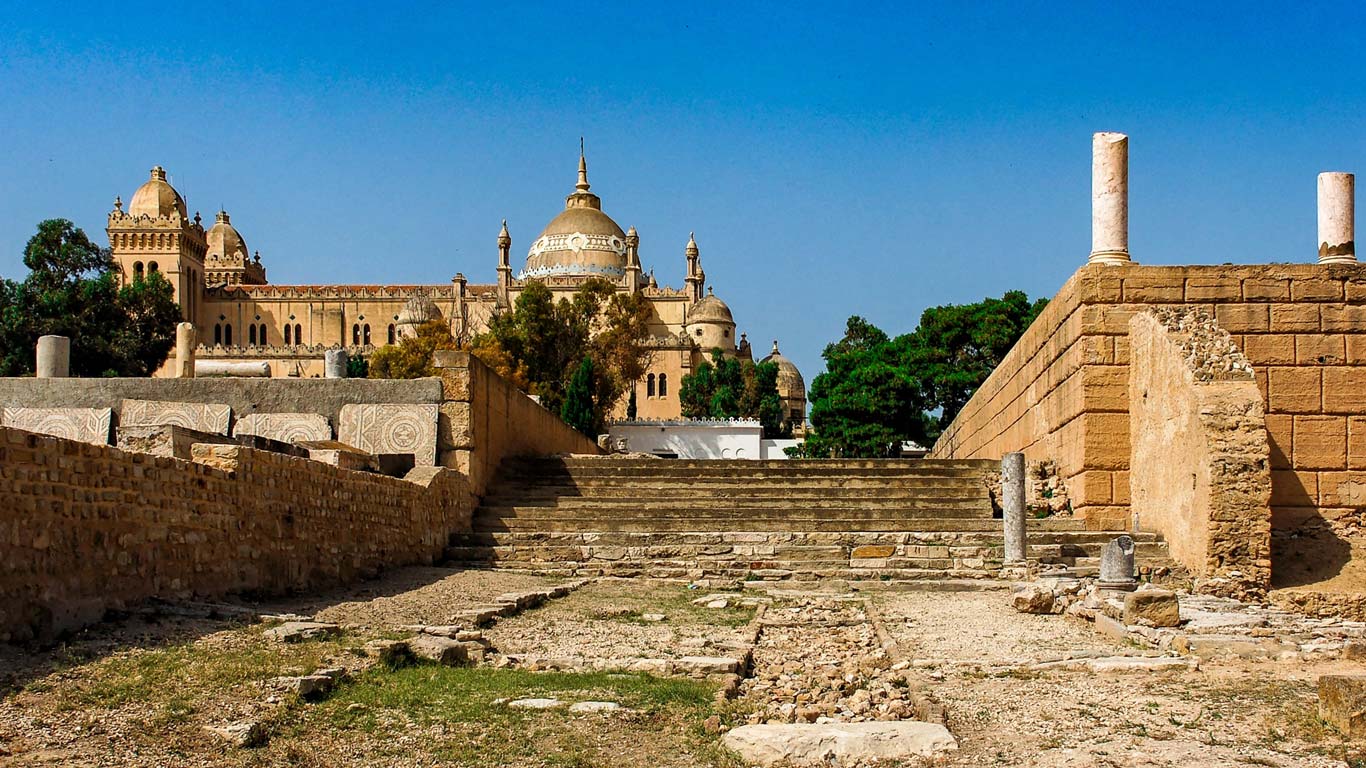
Begin your visit at Byrsa Hill – the citadel and heart of ancient Carthage. It was the centre of both the Punic city and the Roman city that replaced it. Byrsa Hill is one of the few places where remnants of Punic Carthage have survived. You’ll also find several Roman remains here, alongside phenomenal views of Tunis. Don’t miss the local archaeological museum (the National Museum of Carthage), though note it is currently closed for renovation until 2026. The nearby St Louis Cathedral is also worth a visit. In our app, you’ll find a guide covering all the highlights of Byrsa Hill!
Highlights:
- Hannibal’s District – remains of Punic Carthage, including evidence of how Roman buildings were built directly over the Punic street grid.
- Cardo Maximus – the Roman city’s main street.
- St Louis Cathedral and Tomb
Antonine Baths
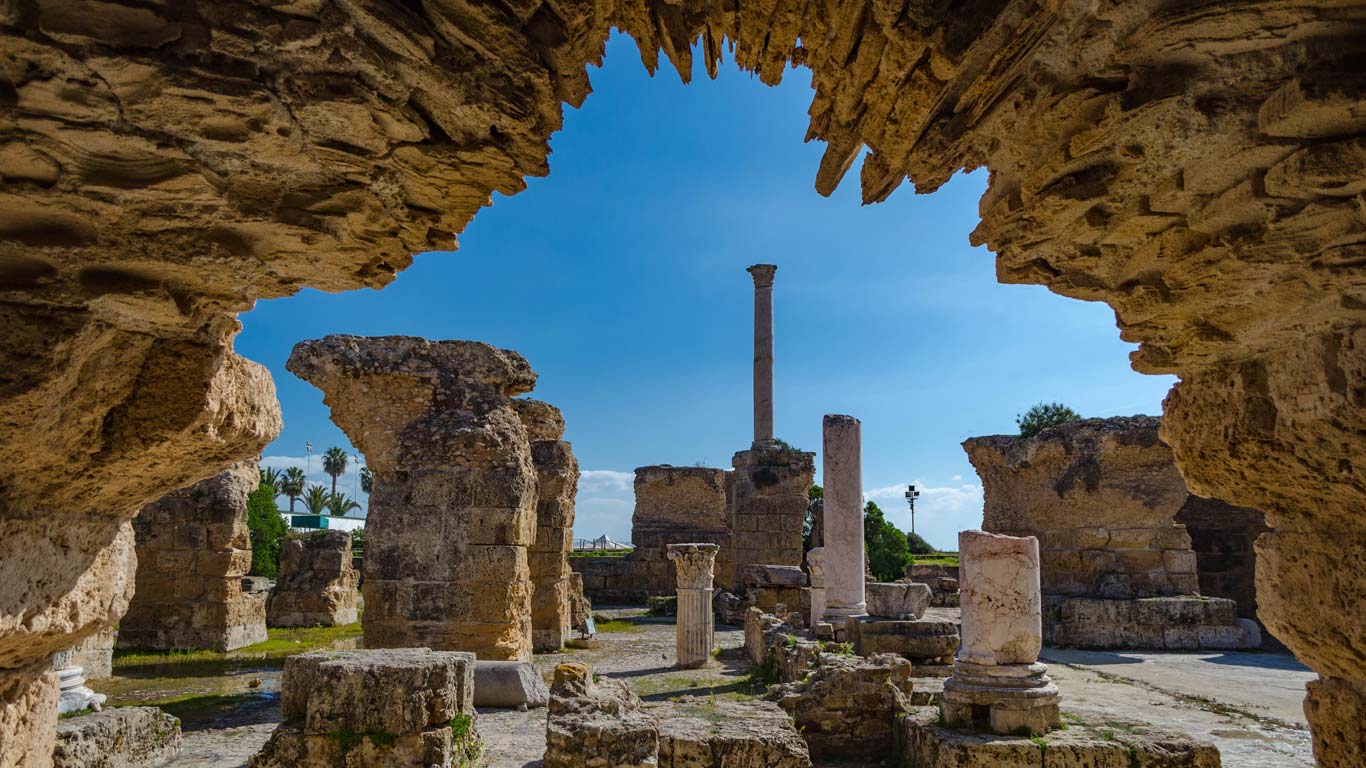
Sometimes also referred to as ‘Antonius Baths’, this is perhaps the most visited monument in Carthage. These were once the largest Roman baths in Africa and the third largest in the entire Empire. Today, only the underground sections remain, but their scale and location speak volumes about Carthage’s former importance. An audio guide is available in our app.
Highlights:
- Caldarium and Frigidarium – the main rooms of the bath complex, still clearly visible in the foundations.
- Latrine remains – a small but fascinating detail!
Punic Ports
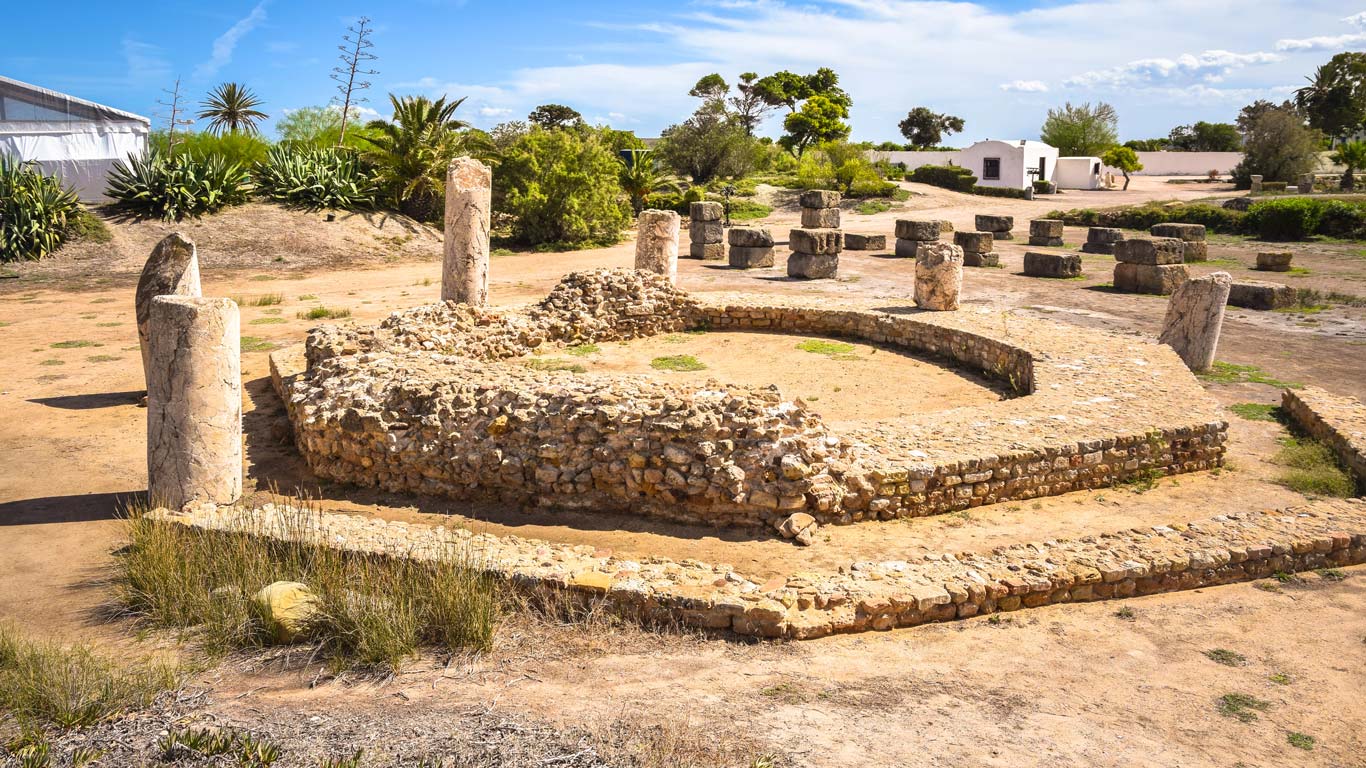
The ancient Phoenician ports of Carthage were a marvel of engineering – with a rectangular commercial port and a circular military harbour. They were central to the maritime power of Carthage. And today they remain one of the most interesting places to see in Carthage. The ports declined during Roman times and were ultimately destroyed after the Arab conquest. Our app includes a guide to this area.
Highlights:
- Remains of the sea port
- Preserved canal connecting the commercial port to the sea
- Located next to the Tophet from Salammbô
Tophet of Salammbô
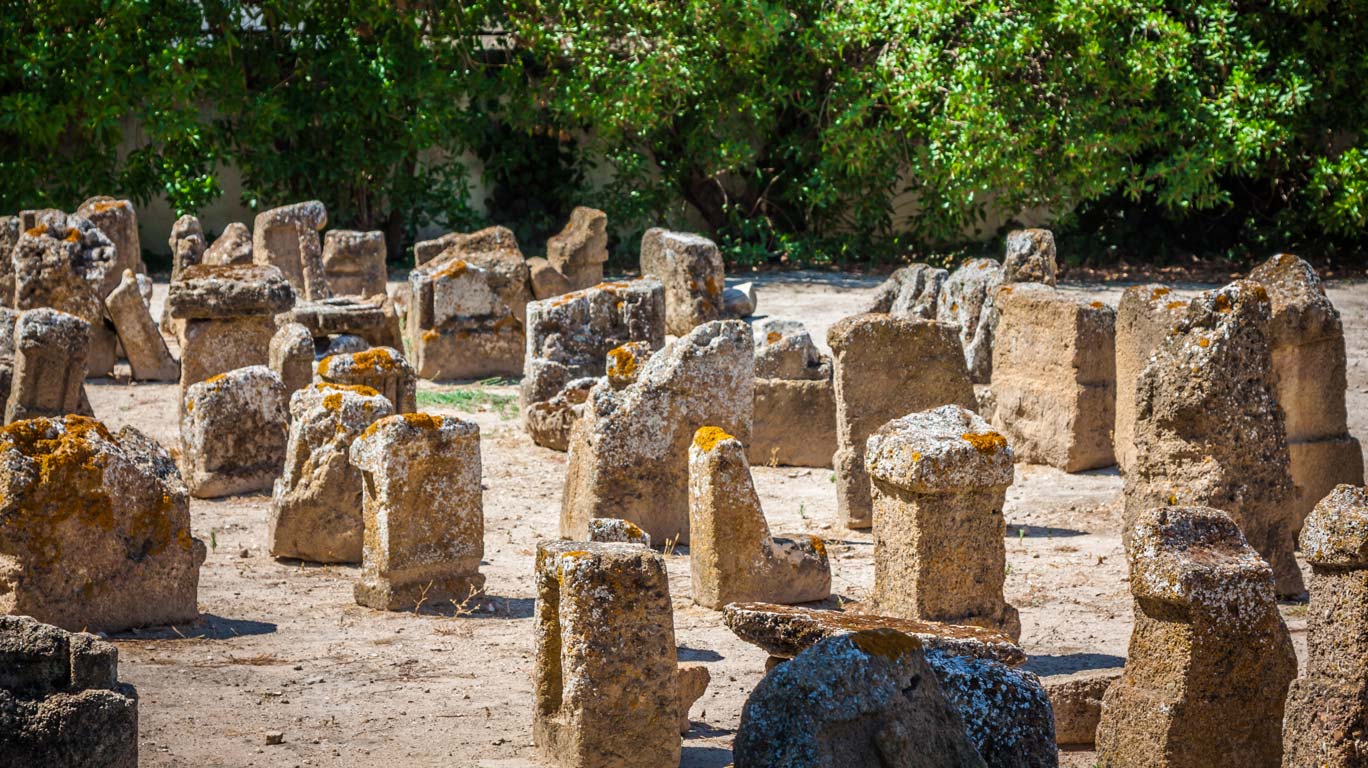
This sacred area is linked to Punic religious rituals, including possible child sacrifice to the gods Baal and Tanit. Its steles and urns provide rare insight into Phoenician worship practices. We offer a short audio guide to help you understand this unique and mysterious site.
Roman Quarter and Roman Theatre
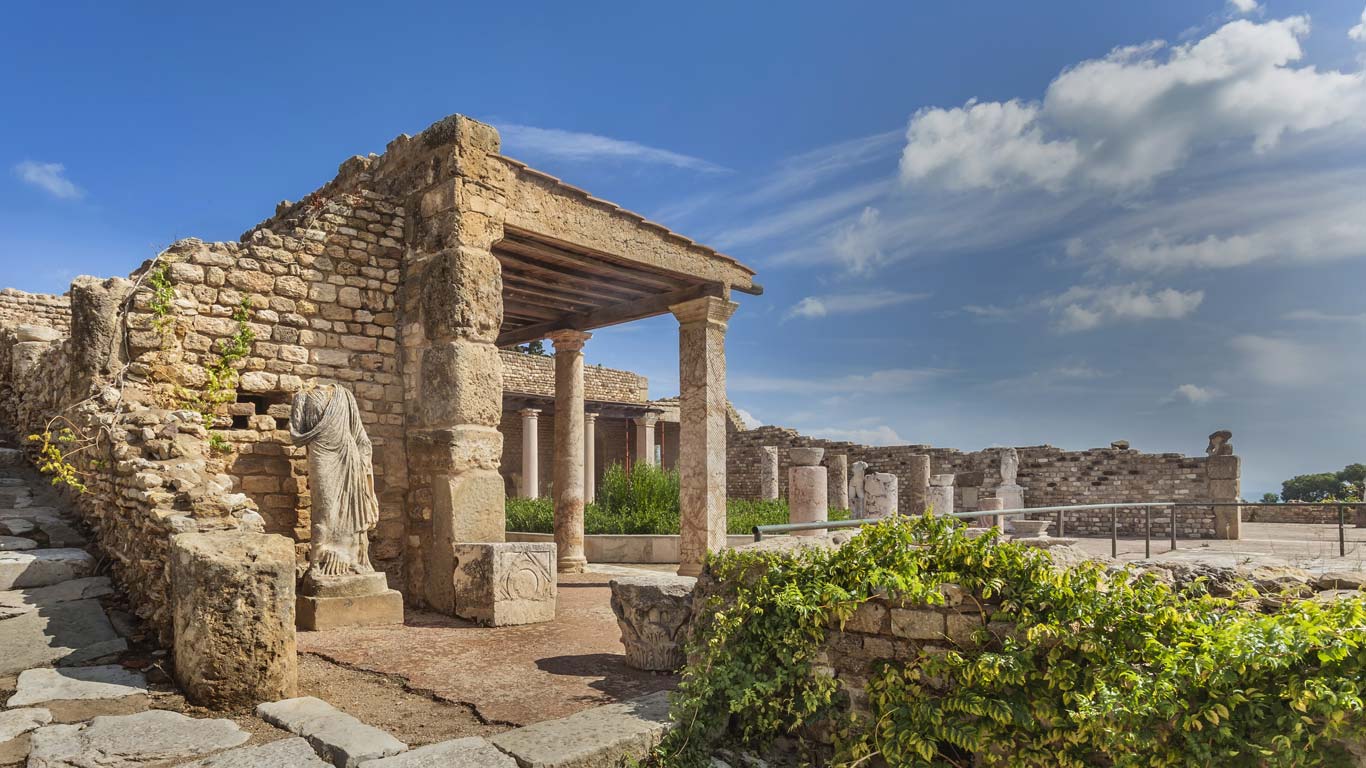
The Roman Quarter is what remains of a wealthy residential district of Roman Carthage. Next to it is the Roman Theatre – the largest amphitheatre in Carthage, still used today for performances. Together, they offer a glimpse into daily life during the Roman era. Our audio guide to this area is the most extensive in the app.
Highlights:
- Villa de la Volière – the ‘Bird Villa’, famous for its mosaics
- Roman street grid – an example of urban planning
- Roman Theatre and Odeon – note: do not confuse this theatre with the amphitheatre located farther north
Roman Amphitheatre
If you enjoyed the Roman Theatre, don’t miss its ‘big brother’ – the Roman Amphitheatre. Once among the largest in North Africa, it hosted gladiator games and public events. Today, only its foundations remain, but its scale and role as a centre of public life are still impressive.
La Malga Cisterns
These massive Roman water cisterns once supplied the city and Antonine Baths via an aqueduct. Their scale and engineering reflect the Roman mastery of infrastructure.
Roman Aqueduct
The aqueduct that supplied La Malga stretched over 130 kilometres, making it one of the longest in the Roman Empire. Its remains can be seen next to the cisterns.
Basilica of Saint Cyprien
We finish our selection of places to see in Carthage with a church. The ruins of this early Christian basilica are key to understanding the rise of Christianity in North Africa and Carthage’s role as a religious centre in late antiquity.