


Grand Egyptian Museum – a three-hour tour
The Grand Egyptian Museum – a three-hour tour. What to see if you’re short on time?
The Grand Egyptian Museum, or GEM, is a place where you could spend a whole day and still feel as though you had seen only part of it. If you’ve made your own way here, you’re in a comfortable position — you can explore at a more leisurely pace, take a coffee break and return to your favourite galleries. Most tourists, however, visit as part of organised tours, often combined with the Pyramids of Giza. In practice, this means one thing: you have to choose.
This article will help you plan your visit so that, in roughly three hours, you can see the most important parts of the museum without feeling overwhelmed by its sheer size. This isn’t a plan for those who want to read every information board. It’s a route for people who want to leave the GEM feeling that they’ve seen its greatest treasures. And if you need a little extra help – give our audio guide a try!
Hour One: The Grand Hall, Ramesses II and the Grand Stairway
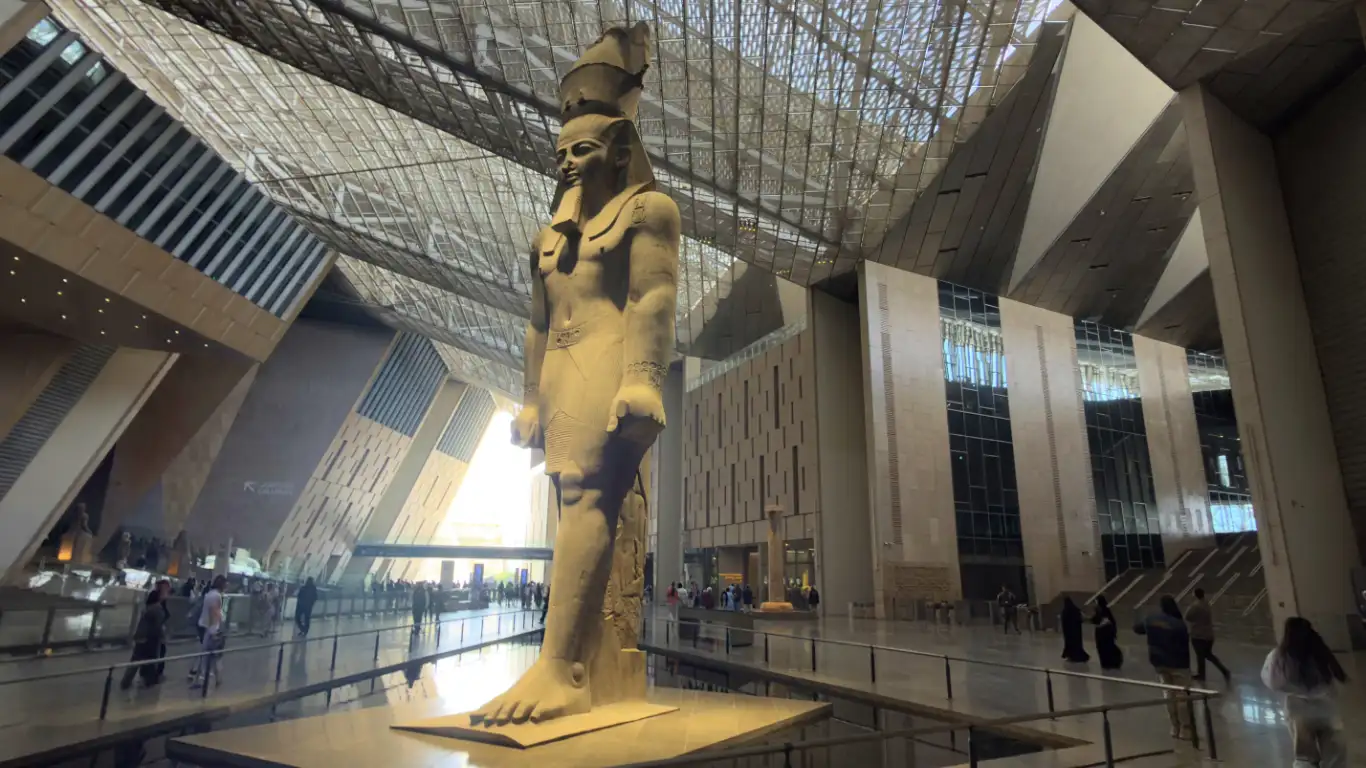
The tour begins in the Grand Hall, although during a three-hour visit this is more of a brief stop along the route. As you enter, you are greeted by a gigantic statue of Ramesses II – one of the museum’s most impressive exhibits. You simply cannot miss it. The statue creates a powerful first impression: the scale, space, light and majesty of ancient Egypt presented in a very modern setting. Remember that we’ve prepared an audio guide to the main exhibits in this part of the museum.
Before you continue, take a look at the ten statues of Senusret I lined up on the steps to the left, beyond the entrance gates.
After viewing the statue, head towards the Grand Stairway. This is one of the GEM’s most important spaces, so don’t treat it merely as a way of reaching the main exhibitions. It is a gallery in its own right, filled with statues, architectural elements, sarcophagi and monumental depictions of rulers and gods.
Be sure to stop by the sphinxes in the second section. Of particular interest is the sphinx of Amenemhat III, a ruler from the Middle Kingdom, discovered at Tanis in the Nile Delta. Also worth noting is the red granite sphinx bearing the names of Ramesses II and Merenptah. It is a fine example of how Egyptian rulers appropriated and reused older monuments, inscribing their own names upon them.
At the top of the stairs, you can catch a glimpse of the Pyramids. The view is interesting, but it’s not worth spending too much time here — they are best seen from the Plateau itself rather than through the museum windows. After a brief stop, turn right towards the Tutankhamun Gallery.
Hour Two: Tutankhamun – the heart of the museum
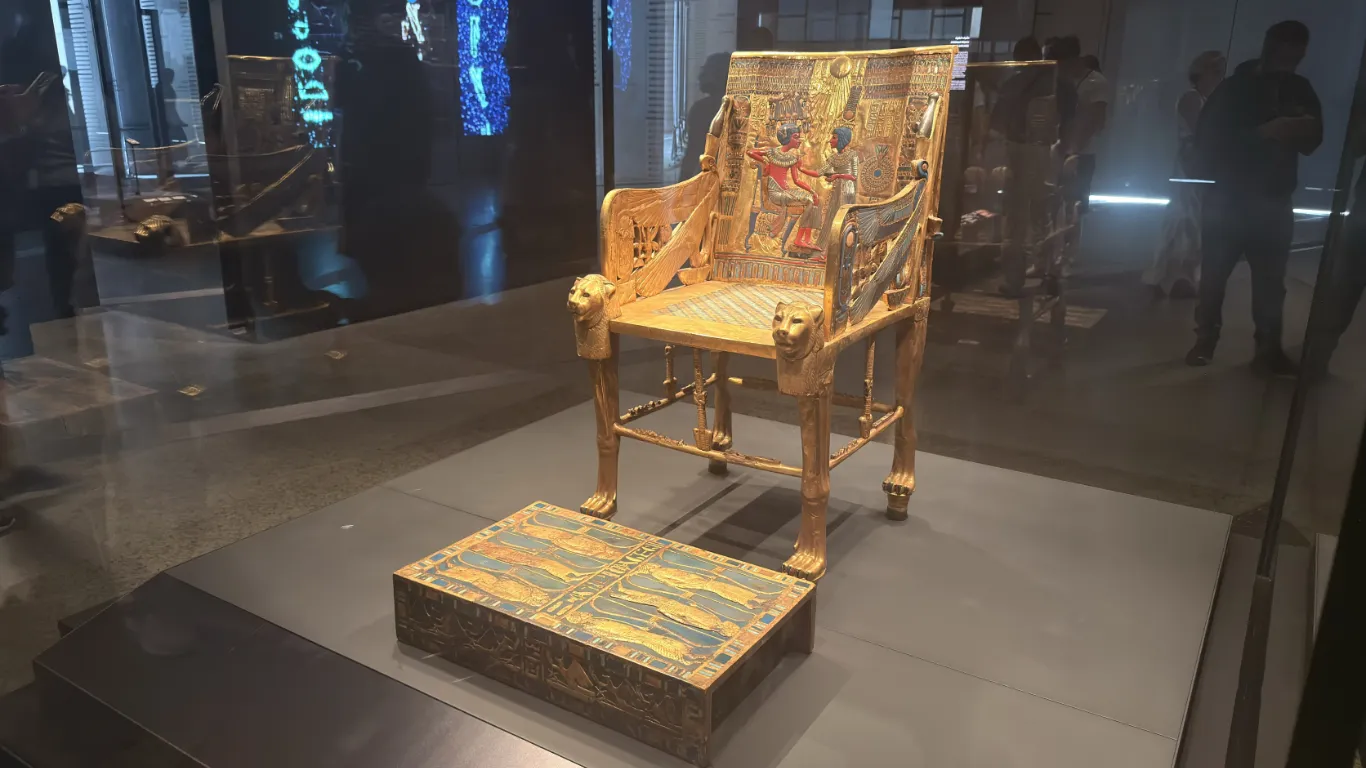
For many visitors, the Tutankhamun collection is the main reason for coming to the GEM. You could even say that the entire museum was built for it. This is the first time the treasures from the young pharaoh’s tomb have been displayed together as a single, vast collection — not simply as individual masterpieces, but as the complete world of the deceased king.
In this part of the tour, expect your pace to slow down. During peak periods, there may be queues at the most popular exhibits. Naturally, most visitors stop at Tutankhamun’s golden mask. And rightly so — it is one of the most famous artefacts of ancient Egypt and probably the most recognisable object in the entire museum. Be sure to check out our audio guide to the highlights of the young pharaoh’s collection.
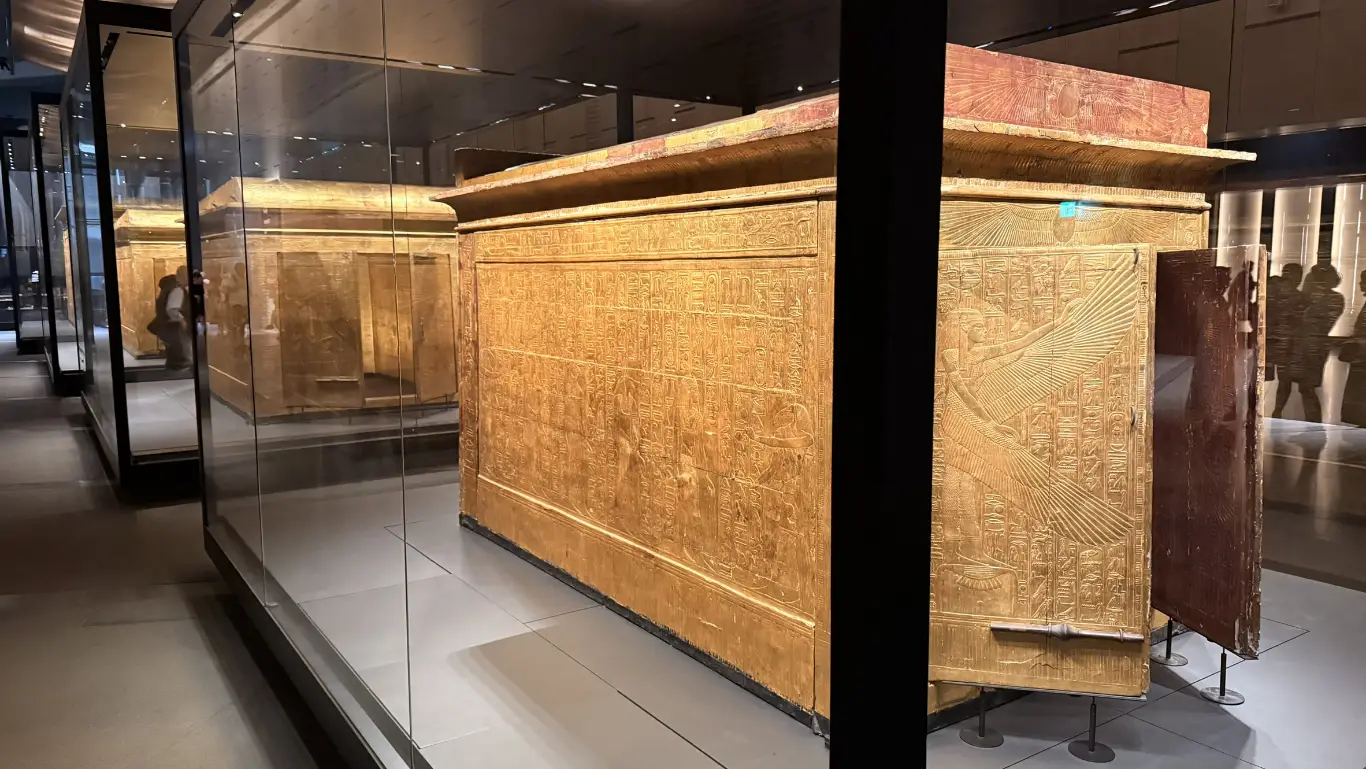
Also take a look at Tutankhamun’s three coffins, including the innermost one, made of solid gold. It’s worth remembering that the pharaoh’s body was protected by as many as eight successive layers: three coffins, a stone sarcophagus and four huge gilded burial shrines. These were not simply ‘chests of gold’, but monumental structures designed to protect the royal burial.
The objects associated with the funeral ceremony are equally impressive: ritual beds, shrines, jewellery, weapons, chariots and other grave goods. But don’t limit yourself to gold. One of the most interesting sections is dedicated to Tutankhamun’s everyday life. Beds, sandals, walking sticks, chests, vessels, games, furniture and small personal items show him not only as an icon, but also as a man who lived in the real world more than three thousand years ago.
If you’re short on time, follow a simple rule: first the mask, coffins and burial shrines, then the everyday objects.
Hour Three: the Main Galleries and Khufu’s boats
Once you’ve left the Tutankhamun Gallery, you’ll probably have about an hour left. That isn’t enough to explore the entire Main Galleries in detail, so it’s worth setting your priorities. In our opinion, it’s best to focus on the central section, dedicated to religion, rituals and beliefs about the afterlife.
Here, you can most easily understand that ancient Egypt was not merely a world of pyramids, mummies and monumental statues. It was a civilisation built around order, ritual and belief in the continuity of life. Take note of the depictions of gods, sarcophagi, amulets, funerary objects and scenes relating to the afterlife. Even a quick walk through this section will give you a better understanding of why the Egyptians devoted so much effort to preparing for death.
Finally, set aside at least fifteen minutes for Khufu’s Boats Museum. This is a separate pavilion within the GEM complex, behind the Grand Stairway. It houses the famous boats discovered near the Great Pyramid of Khufu. The first was displayed for years in a purpose-built museum beside the pyramid before being moved to the new GEM complex. The second, discovered in a neighbouring shaft, remained dismantled for many years. Today, it is undergoing conservation and is gradually being reconstructed.
It’s a memorable way to round off your visit. After Tutankhamun’s gold and the monumental statues, you suddenly find yourself standing before a wooden boat dating back thousands of years — delicate, technically impressive and full of mystery. Was it used for the King’s burial? Was it intended to allow him to make a symbolic journey with the sun through the afterlife? We do not know for certain. And that is precisely what makes it so fascinating.
More on our Blog
The Pyramids of Giza – tickets and practical advice (2026)
Pyramids of Giza – an unforgettable journey to the edge of the desert The Pyramid of Cheops. Known also as the Great Pyramid
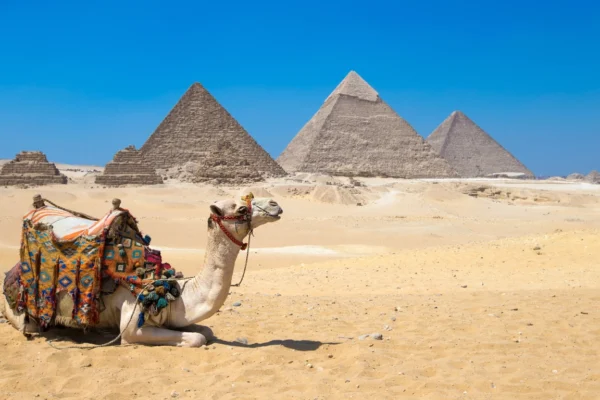
Pyramids of Giza – When to Visit and How to Explore
When is the best time to visit the Egyptian pyramids? You can visit Giza all year round. But the best time to explore